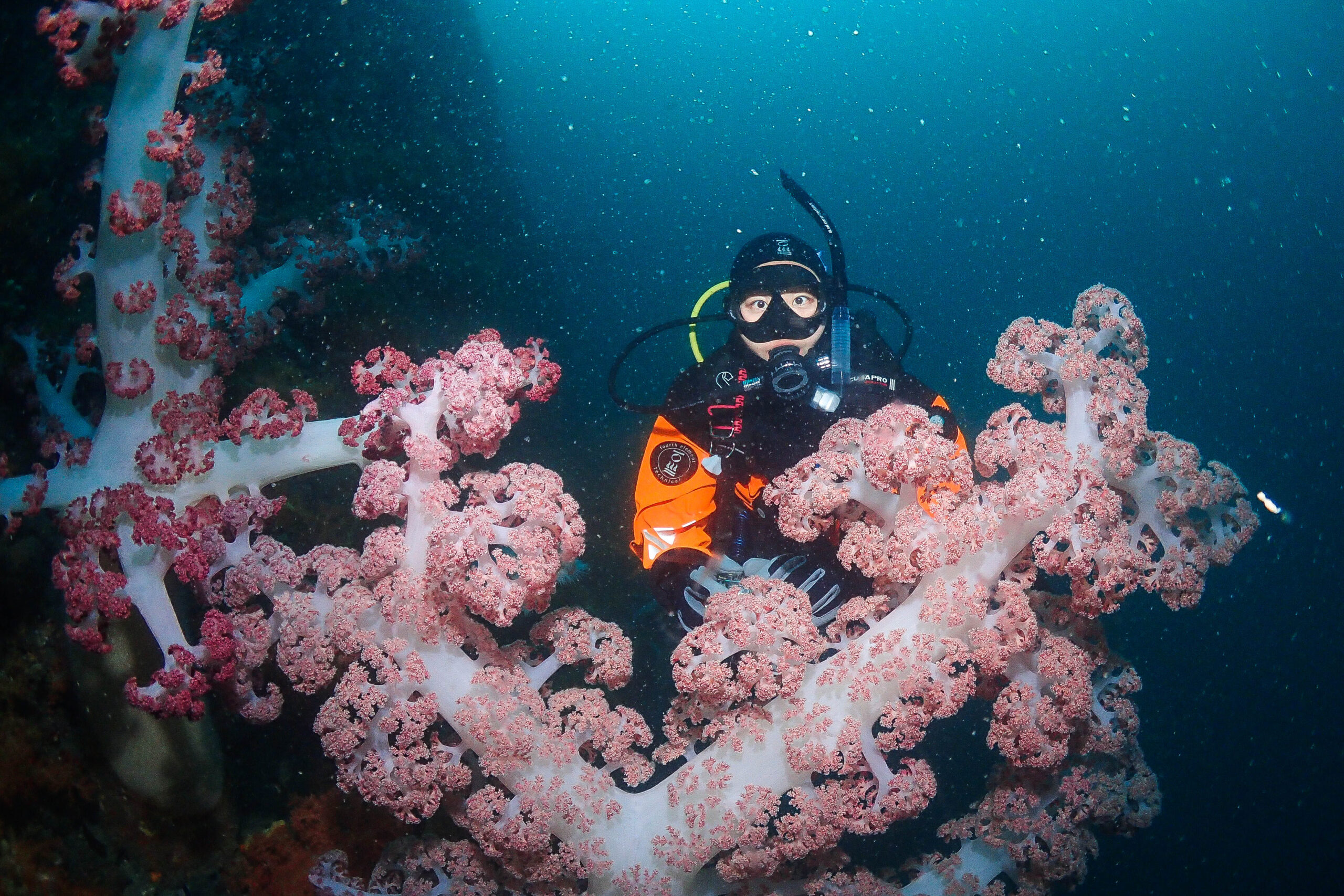
Today I’d like to talk about something I’ve witnessed time and again as a diving instructor. Students who come to the dive center are usually and quite naturally very excited. Everyone is smiling, taking photos, and talking about why they want to start diving. Everything seems quite enjoyable.
But sometimes, the moment they first enter the water, stress and tension can set in. Breathing quickens, our minds send mixed signals, and our heart rate rises. And sometimes, the student gives that signal.
“I want to go back up.”
For many people, the first dive isn’t just a physical experience. It’s also a psychological one. And this is actually completely normal. So let’s take a look at what we’re experiencing during that first dive.

Humans are not creatures that have evolved to live underwater. Our brains are adapted to a land based environment. Breathing, moving, and perceiving our surroundings come quite naturally on land. However, when we dive, many things happen simultaneously that we are not accustomed to.
First, there’s our mask. For many of us, having our nose out of use and breathing only through our mouth is an unfamiliar situation. Additionally, during a dive, our body suddenly loses its connection to gravity. Our perception of sounds and vision changes. And our brain gets the feeling that we’re in a place we don’t belong.
The brain may initially interpret this situation as unfamiliar and potentially dangerous. And this is where one of our oldest defense mechanisms kicks in.
There is a small structure in the brain called the amygdala. This structure plays a key role in the perception of fear and danger. When the brain detects a threat, the body immediately triggers the “fight or flight” response. The body’s reaction to this includes an increased heart rate, rapid breathing, muscle tension, and the release of adrenaline and cortisol.
On land, this response can help us survive. But underwater, things work a bit differently. Because what we need while diving is the exact opposite, to breathe slowly and stay calm. That’s why the first task for new divers is actually to teach the brain that the environment is safe.
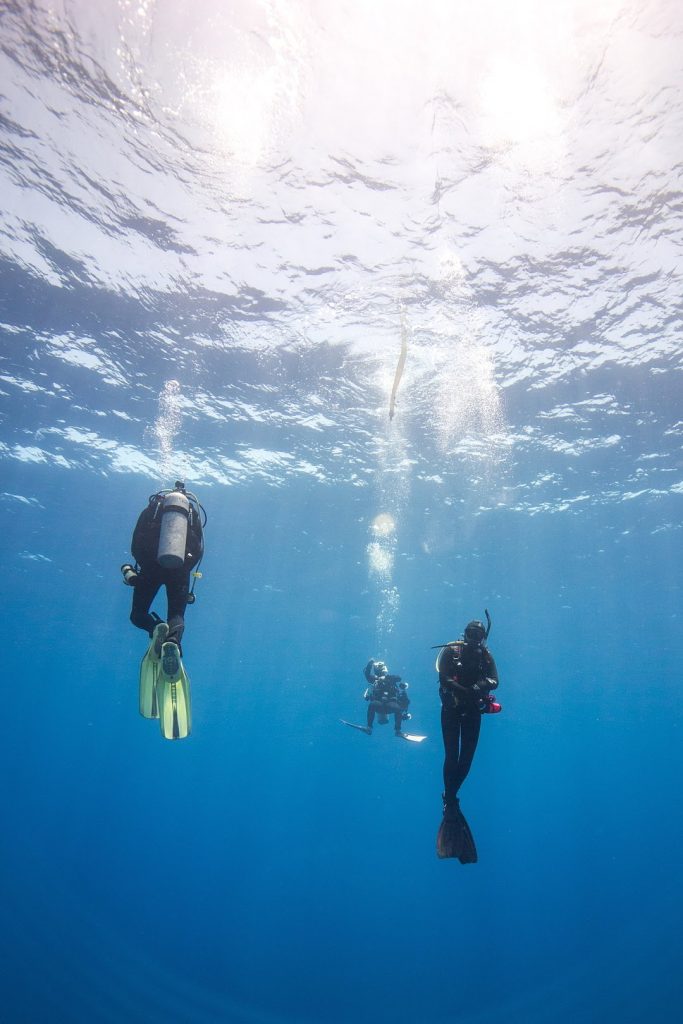
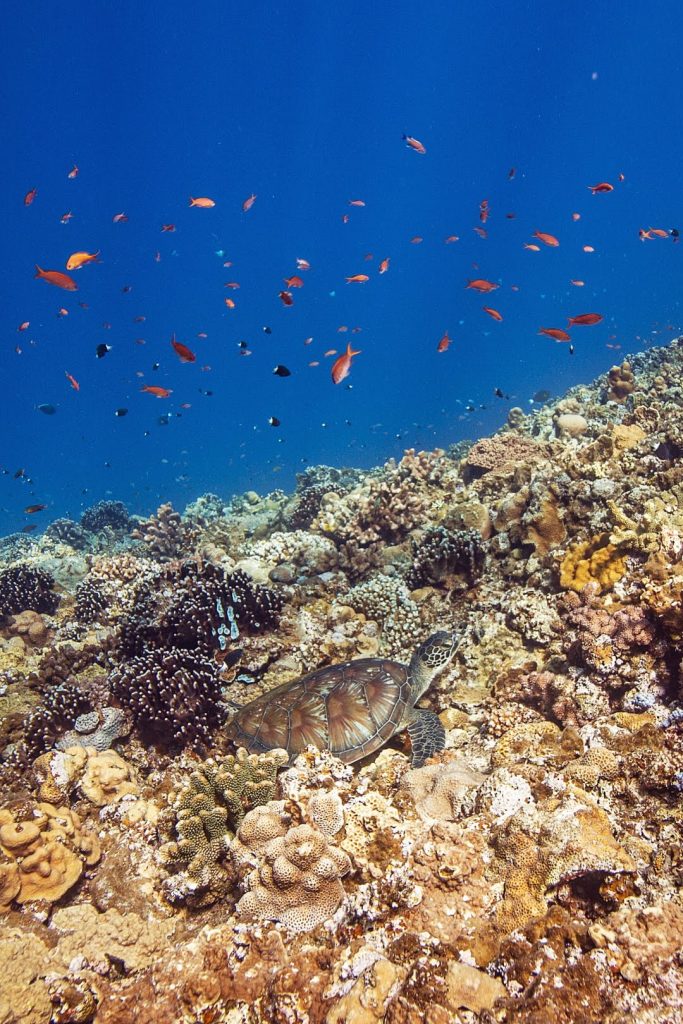
The interesting thing is that for most new divers everything changes suddenly at a certain point. The brain adapts to the new conditions immediately. I can breathe, everything is under control, and this is really enjoyable.
This is when stress begins to fade. The mind shifts out of survival mode and into curiosity mode. The diver begins to notice the beauty around them. They’re captivated by the magic of the fish, the light, and the movement of the water.
The reason everything is done slowly in diving courses isn’t just about safety. It’s also about psychological adaptation. There’s something I always remind my stressed out students.
“People fear what they don’t know.”
There’s nothing more natural than that. But as the course progresses and the question marks in their minds fade away, a sense of relief immediately sets in for the divers. So, feeling excited before starting the course is perfectly normal.
A good instructor gives the student time. They explain the entire course process in a way that leaves no room for questions. In other words, after the first briefing, the questions causing the student’s fear should be answered, and every stage of the course should be clearly explained one by one.
Additionally, a small amount of manageable excitement is a good thing. This feeling helps the diver stay more attentive. Eventually, that excitement gives way to the dive itself, the rules of diving, and respect for the underwater world.
And over time, diving becomes one of the most peaceful experiences in life for many people. For many divers, the ocean, the sea, and lakes become some of the quietest and most serene places on Earth.
Stay safe