Throw away all the dive sites you have ever dived. Imagine swimming between two continents, surrounded by crystal-clear water that has been decades in the making through volcanic rocks. Welcome to Silfra in Iceland’s Þingvellir National Park, offering one of the most unique diving experiences in the world.

You arrive at the National Park after a 45-minute drive from Reykjavik. When you are approaching Silfra, you will be greeted by an imposing wall. For those of you who have seen it, this wall may remind you of Game Of Thrones. It is very normal because some episodes of Game of Thrones were filmed here.
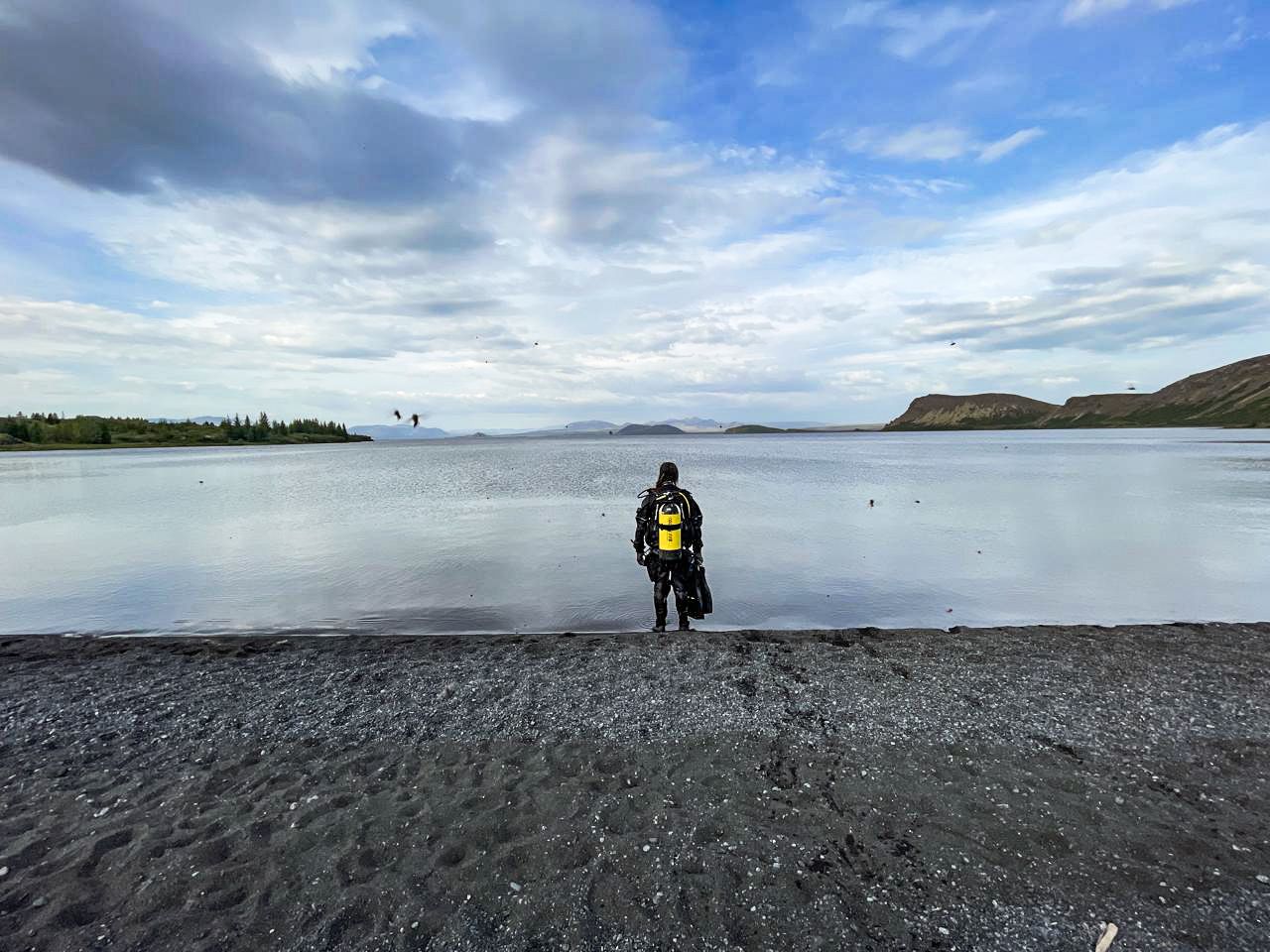
When you arrive at the Silfra meeting point after parking your car, you will share the excitement of divers from different parts of the world.
The name “Silfra” means ‘silver’ in Icelandic. This probably refers to the shimmering quality of the water, which, due to its extraordinary clarity, reflects light in a way that gives the crevasse a silvery appearance.


The Geological Story of Silfra – Where the Continents Split
Silfra is not just a diving spot. It’s a living fissure, a rift between Earth’s two giant tectonic plates. The North American and Eurasian plates. So when you dive in Silfra, you are literally swimming between continents. The geological wonder around you is the result of millions of years of Earth’s restless movement.

How Silfra was formed?
Iceland’s tectonic activity causes frequent earthquakes. The earthquake that widened the Silfra rift in 1789 was one of them. Over time, parts of the rift collapsed, creating the deep caves, narrow gorges and dramatic rock formations we see today.
Silfra lies within the Þingvellir Rift Valley, part of the Mid-Atlantic Ridge that runs through Iceland. It is one of the few places on Earth where a rift can be seen above sea level.
And Silfra is still on the move. Not only Silfra, but the tectonic plates are moving away from each other at a rate of about 2 cm per year, slowly stretching and fracturing the land between them. This movement creates rifts, valleys and lava fields.
Silfra is just one of these formations and one of the most striking of these crevasses, filled with meltwater from the Langjökull Glacier. This water filters through porous underground lava for 30 to 100 years to reach Silfra, resulting in exceptionally clear water with visibility of over 100 meters.


Why are the rocks so different?
Another thing you will notice while diving in Silfra is that the rocks look different from each other. Some are lava formations with sharp edges, rounded rocks or more colorful pieces.
Most of the rocks in Silfra are basalt, a volcanic rock formed from rapidly cooling lava. Basalt is dark gray to black in color and is often porous or rough.
These lava rocks date back thousands of years and form the “walls” and “floors” of Silfra’s underwater canyons.


As for why rocks have different colors. The reason is oxidation. We can see this not only underwater but also in the Lava Tunnels and Caves in Iceland. Exposure of rocks to oxygen and minerals in water causes rusty orange or reddish spots, especially on iron-rich basalt. These colors can vary depending on the cooling rate of the lava.
Of course, there are other reasons for the coloration. Algae, for example, give rocks soft green, gold or red hues, depending on depth and light.

As you glide through Silfra, you not only experience one of the clearest waters on Earth, but you also dive into a fissure that tells the story of the Earth’s formation, movement and transformation.
Every rock, every ledge, every narrow crack was once the site of volcanic eruptions, earthquakes or glacial slides.

Life Beneath the Surface
Silfra is not known for its rich underwater life, but it is home to some unique species.
The Dwarf Char, which we see more often than other species. A subspecies of the Arctic Char, these small fish (up to 10 cm) live year-round in the depths of the fissure.
Arctic Char occasionally enter Silfra during the mating season between August and September.
Algae, especially the neon green algae known as “ troll hair” decorate the underwater landscape.

How Algae Grow in Silfra – And Why Is It So Colorful?
Silfra offers different landscapes in different seasons. As the summer season approaches, the growing algae make Silfra colorful.
The algae in Silfra thrive thanks to a combination of unique environmental conditions.
The water that reaches Silfra after years of traveling through lava rocks is rich in minerals. And that’s food for algae. Some algae have also adapted to grow in low nutrient conditions (Oligotrophic).
Silfra’s water clarity is legendary. Visibility often exceeds 100 meters. This means that sunlight can reach deeper into the fissure and photosynthesis can take place deeper than in most natural waters.

Another natural wonder is that these algae are not single but multi-colored. If you look closely while diving, you will notice more than just green. You can find algae in green, golden-brown and even reddish tones. The color differences are caused by light and pigments.
Green Algae (like the famous “troll hair”) contain chlorophyll, the same pigment that makes plants green. They are dominant in areas where sunlight is strong and abundant.
Brown and Golden Algae contain fucoxanthin, a pigment that helps them absorb blue and green light more efficiently and penetrates deeper underwater.

Although Red Algae are less common in Silfra, they can sometimes be seen. Red Colored Algae are characterized by being adapted to very low light, using phycoerythrin to absorb even the weakest rays.
In Silfra, these pigment adaptations allow different algae to grow at various depths and light levels, painting the underwater landscape in subtle but beautiful hues.
No matter how difficult the conditions, life somehow finds a way. When you look at these algae knowing all this information, your enjoyment of Silfra is multiplied.

One thing I cannot miss mentioning is the birds of Silfra.
Although the cold waters of Silfra are inhospitable for most fish, the surface and surrounding areas attract various duck species, especially in the warmer months.
Common Mergansers, Crested Ducks and Wild Ducks are the species you will constantly see around you. The presence of these birds adds a dynamic layer to Silfra’s ecosystem and shows us how interconnected the aquatic and terrestrial environments really are.


My purpose of coming to Iceland and Silfra was to gain different experiences as a diving instructor. But not only diving but everything I learned here gave me a different perspective. Diving in Silfra is not an ordinary underwater experience. It is a journey through a world shaped by ice, lava and crystal clear water between tectonic plates over time.


Quiet, otherworldly and unassuming.
The vibrant kelp, the dancing light and even the occasional duck soaring above remind us that even in the coldest, clearest corners of the planet, life finds a way. Whether you are an experienced diver or a curious traveler, Silfra will leave a mark on your soul and call you back.
Stay Safe